Explore original mathematics papers on various topics, some of which are new areas of study.
Experimental Mathematics? Well, 'put it in the computer for a while and see what happens'...
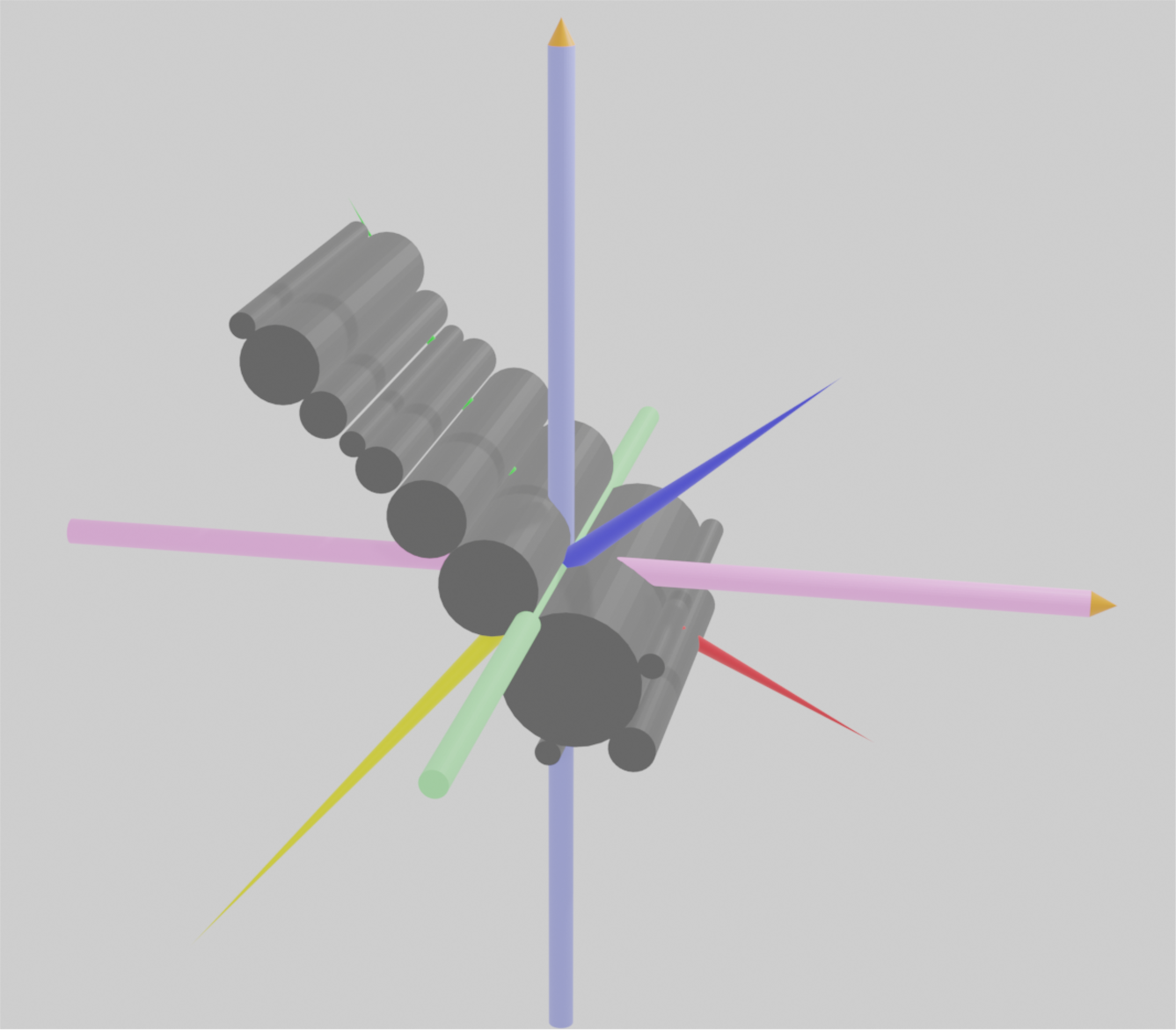
A working commutative positive axes complex coordinate system in 3-space is possible. Here, also, Cantor dust, Koch snowflakes, Sierpinski gaskets, Julia sets, and the famous Mandelbrot set meet modern computers and are discovered to hold additional secrets. Infinite sets, imaginary numbers, negative numbers, even zero, are found to not be what we thought we had invented. Feigenbaum and Mandelbrot are re-examined, as are Riemann and Euler ('Benny and Lenny'). There may be an alternative to Newton and Leibniz that better fits the physics of our universe.
These papers cover many topics but are all under the umbrella of what I call Positive Integer Mathematics (PIM). The work stems from the conviction that the universe and everything in it are discrete and finite. Discrete means having a smallest size or extent - not continuous. Finite simply means nothing exists in infinite number. Our mathematics does not address these conditions well, being both continuous and infinite in construction.
These works have not been published in the classical sense of appearing in journals of mathematics or science, so none have been sent out for peer review. Given publishing's time lag, the obstacles in the way of submission, the fundamental flaws of peer review, and the rising problem of the replication crisis, I and many others are turning to web publishing to make known work that might be of interest to others. These papers have been reviewed by several mathematicians with encouraging feedback. I invite comments and discussion on these or related topics sent to the email in the 'Contacts' menu. Mention of errors in fact, typographical errors, or site design problems is appreciated, as well.
These papers represent years, even decades, of study starting when I was in high school. I submit them to the web in hopes other mathematicians (professional, amateur, philosophical, student, or 'none-of-the-above') can build upon these ideas. Or, perhaps, to discredit them with better concepts explaining either or both our real physical environment or our invented mathematical worldview.

Please browse the works presented in the menu 'The Papers'. The papers are in PDF format.